Discover Artificial Intelligence for Business: Unlocking Enterprise AI Solutions and Strategies
Artificial Intelligence (AI) is revolutionizing the way businesses operate, offering innovative solutions that enhance efficiency and decision-making. This article delves into the transformative role of AI in modern enterprises, exploring its key technologies, implementation strategies, and the ethical considerations that accompany its use. As organizations strive to remain competitive, understanding AI’s capabilities becomes essential. We will cover the definition of AI, its impact on business efficiency, the technologies driving innovation, and the best practices for successful implementation. Additionally, we will examine the business benefits and return on investment (ROI) of AI solutions, along with the ethical implications that must be addressed.
What is Artificial Intelligence and Its Role in Modern Business?
Artificial Intelligence refers to the simulation of human intelligence in machines programmed to think and learn. This technology plays a crucial role in modern business by automating processes, analyzing data, and providing insights that enhance decision-making. AI systems can process vast amounts of information quickly, enabling businesses to respond to market changes and customer needs more effectively. The integration of AI into business operations not only streamlines workflows but also fosters innovation by allowing companies to leverage data-driven insights for strategic planning.
How Does AI Improve Business Efficiency and Decision Making?
AI significantly improves business efficiency by automating repetitive tasks and providing analytical insights that inform decision-making. For instance, AI-driven tools can analyze customer data to identify trends, enabling businesses to tailor their offerings and marketing strategies. Companies that implement AI solutions often report increased productivity and reduced operational costs. Case studies have shown that organizations utilizing AI for data analysis can make decisions up to 25% faster than those relying solely on human analysis.
What Are the Key AI Technologies Transforming Enterprises?
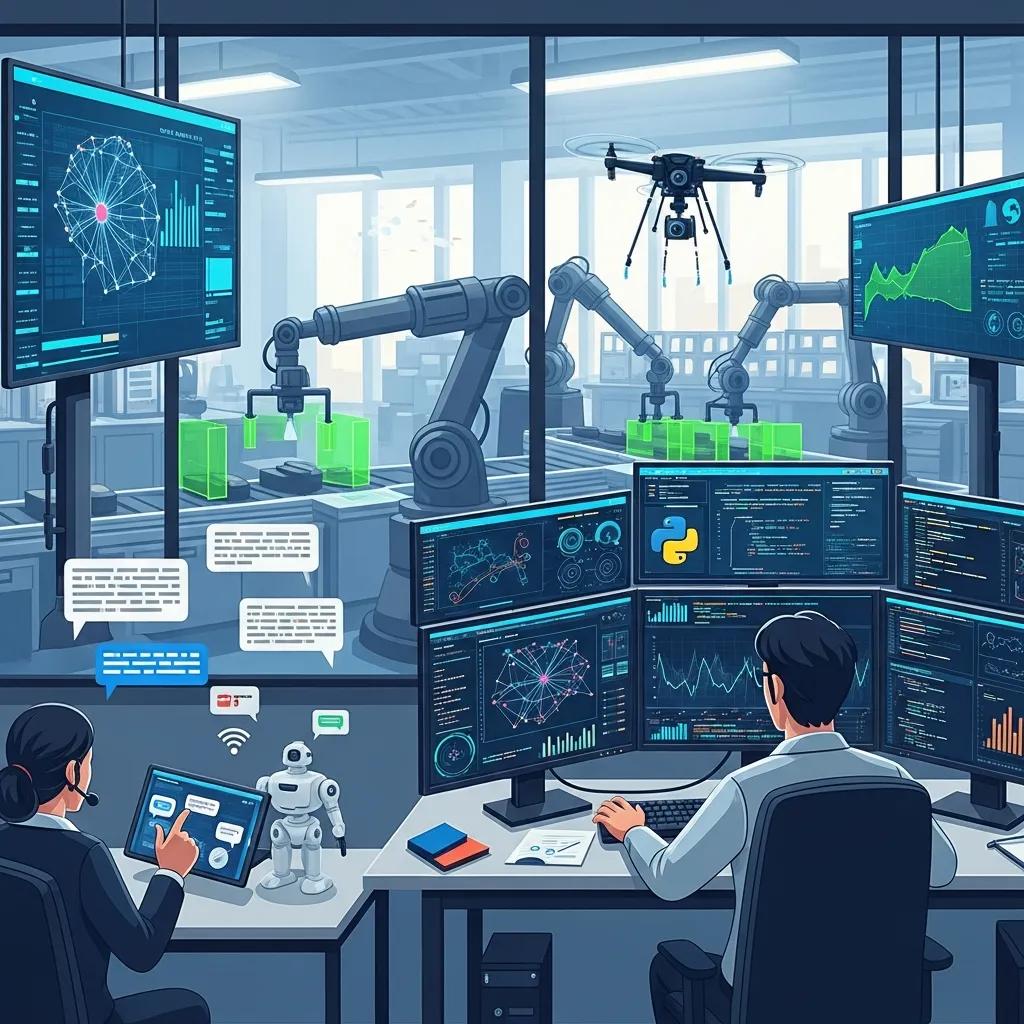
Several key AI technologies are transforming enterprises today. These include:
- Machine Learning: This technology enables systems to learn from data and improve their performance over time without being explicitly programmed.
- Natural Language Processing (NLP): NLP allows machines to understand and interpret human language, facilitating better communication between humans and computers.
- Computer Vision: This technology enables machines to interpret and make decisions based on visual data, which is particularly useful in industries like manufacturing and healthcare.
These technologies are at the forefront of AI innovation, driving significant advancements in various sectors.
Which AI Technologies Are Driving Business Innovation in 2026?
As we look towards 2026, several AI technologies are poised to drive further business innovation. The rapid evolution of AI tools and platforms is reshaping how companies operate and compete in the marketplace.
How Does Machine Learning Enable Predictive Analytics for Enterprises?
Machine learning enhances predictive analytics by enabling systems to analyze historical data and identify patterns that can forecast future outcomes. This capability is invaluable for businesses looking to optimize their operations and make informed decisions. For example, retailers can use predictive analytics to anticipate customer demand, allowing them to manage inventory more effectively and reduce waste.
Further research highlights the specific application of machine learning in enhancing predictive analytics for retail, particularly within ERP-enabled systems.
Predictive Analytics with Machine Learning for ERP-Enabled Retail
Enterprise Resource Planning (ERP) systems are known to be key to online retail management and its resources and operations where proper demand forecasting and sales projections are needed to be effective and competitive. This paper presents a Convolutional Neural Network (CNN) based prediction model for online retail systems that are ERP-enabled.
Machine Learning Algorithms for Enhancing Predictive Analytics in ERP-Enabled Online Retail Platform, V Maniar, 2022
What Are Emerging AI Tools and Platforms for Business Automation?
Emerging AI tools and platforms are revolutionizing business automation. These tools streamline processes, reduce manual effort, and enhance productivity. Some notable examples include:
- Robotic Process Automation (RPA): Automates routine tasks across various applications.
- AI-Powered Chatbots: Provide customer support and engagement without human intervention.
- Data Analytics Platforms: Offer insights through advanced data processing and visualization.
These tools are essential for businesses aiming to enhance efficiency and reduce operational costs.
How Can Businesses Implement AI Successfully?
Successful AI implementation requires a strategic approach that considers both technological and organizational factors. Companies must assess their readiness for AI adoption and develop a clear strategy that aligns with their business goals.
What Are the Best Practices for AI Adoption in Enterprises?
To ensure successful AI adoption, businesses should follow these best practices:
- Define Clear Objectives: Establish specific goals for AI implementation to measure success.
- Invest in Training: Equip employees with the necessary skills to work alongside AI technologies.
- Foster a Culture of Innovation: Encourage experimentation and collaboration to drive AI initiatives.
These practices help organizations maximize the benefits of AI while minimizing potential challenges.
Which Challenges Do Companies Face When Integrating AI Solutions?
Integrating AI solutions can present several challenges, including:
- Technical Challenges: Ensuring compatibility with existing systems and data quality.
- Cultural Resistance: Overcoming employee apprehension towards new technologies.
- Resource Allocation: Securing the necessary budget and expertise for implementation.
Addressing these challenges is crucial for a smooth transition to AI-driven operations.
What Are the Business Benefits and ROI of AI Solutions?

The business benefits of AI solutions are substantial, offering organizations the potential for significant ROI. AI can drive revenue growth, enhance operational efficiency, and improve customer satisfaction.
How Does AI Drive Revenue Growth and Operational Efficiency?
AI contributes to revenue growth by enabling businesses to optimize their operations and enhance customer experiences. For instance, AI-driven analytics can identify new market opportunities, while automation reduces costs and increases productivity. Companies that leverage AI effectively often see a marked improvement in their bottom line.
Which Industries Are Leading in AI Adoption and Impact?
Several industries are at the forefront of AI adoption, including:
- Healthcare: Utilizing AI for diagnostics and patient care optimization.
- Finance: Implementing AI for fraud detection and risk management.
- Retail: Enhancing customer experiences through personalized recommendations.
These industries demonstrate the transformative impact of AI on business operations and customer engagement.
Why Are Ethical Considerations Crucial in AI for Business?
As AI technologies become more prevalent, ethical considerations are increasingly important. Businesses must navigate the complexities of AI ethics to ensure responsible use of these powerful tools.
Indeed, the widespread adoption of AI brings forth a critical examination of its ethical implications, as detailed in recent studies.
Ethical AI Adoption in Business: Challenges & Best Practices
Widespread adaptation and implementation of artificial intelligence (AI) across the businesses make ethical implications increasingly important. This study explores the ethical challenges and best practices surrounding the adoption of AI in various business contexts. The study finds that following ethical concerns are the hinderance in the adaptation of AI in business (Privacy and data protection, bias and fairness, transparency and explainability, job displacement and workforce changes, algorithmic influence, and manipulation, accountability, and liability, and ethical decision making).
A study on ethical implications of artificial intelligence adoption in business: challenges and best practices, M Maiti, 2025
How Can Companies Ensure Responsible AI Use?
To ensure responsible AI use, companies should implement ethical guidelines that address issues such as data privacy, algorithmic bias, and transparency. Establishing a framework for ethical AI practices helps organizations build trust with stakeholders and mitigate potential risks.
This emphasis on ethical frameworks is further supported by discussions on balancing security, compliance, and bias mitigation in enterprise automation.
Ethical AI in Enterprise Automation: Security, Compliance & Bias Mitigation
This paper explores the ethical dimensions of Artificial Intelligence (AI) in enterprise automation, emphasizing the critical need to balance security, regulatory compliance, and bias mitigation. AI technologies are revolutionizing industries by optimizing operations, enhancing decision-making, and reducing costs. However, their adoption brings ethical challenges, particularly concerning data security, compliance with evolving regulations, and the risk of biased decision-making.
Ethical AI in Enterprise Automation: Balancing Security, Compliance, and Bias Mitigation, 2025
What Are the Future Trends Shaping Enterprise AI?
Looking ahead, several trends are expected to shape the future of enterprise AI, including:
- Increased Focus on Explainability: Ensuring AI decisions are transparent and understandable.
- Integration of AI with IoT: Enhancing data collection and analysis through interconnected devices.
- Regulatory Developments: Adapting to evolving regulations governing AI use.
These trends will influence how businesses adopt and implement AI technologies in the coming years.
| AI Technology | Application | Impact Level |
|---|---|---|
| Machine Learning | Predictive analytics | High |
| Natural Language Processing | Customer service automation | Medium |
| Computer Vision | Quality control in manufacturing | High |
This table illustrates the diverse applications of AI technologies and their varying impacts across industries.
In conclusion, the integration of AI into business operations presents a wealth of opportunities for innovation and efficiency. By understanding the technologies driving this transformation and addressing the associated challenges, organizations can position themselves for success in an increasingly competitive landscape.